
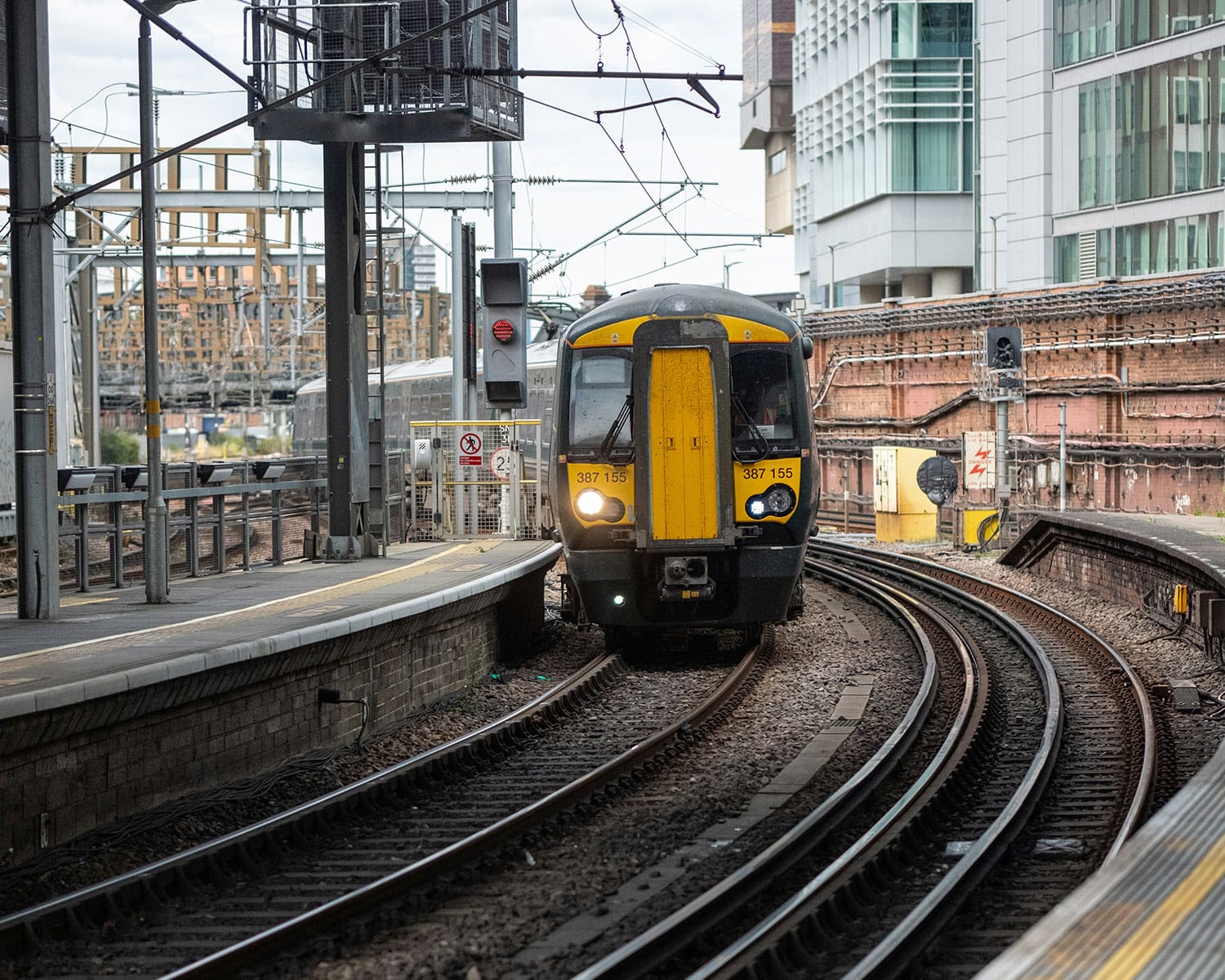
CNC precision engineering is used to the meet the high levels of strength, precision, and quality control the rail industry demands. At M-CNC, our decades of CNC engineering expertise enable us to deliver on this every time.
What components are manufactured for the rail industry?
Both structural and mechanical components are CNC engineered for the railway industry.
1. Brake housing
This component is made from strong metals, such as carbon steel, and houses the hand-braking systems for railcars.
2. Wheels and bogie components
A railway bogie is the four or-six wheeled truck that supports railway vehicles. The design of bogies has continually developed; railway bogies of today are a complex construction of intricate CNC turned components.
3. Engines and gearbox components
CNC machining is used to create many of the complex engine and gearbox parts in railway trains.
Other machined rail industry products include:
- Wheel hubs and brake discs
- Axles and axle boxes
- Suspension components
- Pinion sets and gear racks
- Traction motor housings and components
How does CNC engineering aid manufacture for the rail industry?
There are several reasons CNC precision engineering is the manufacturing method of choice for the rail industry.
1. Meeting tight tolerances
CNC machining achieves the tight tolerances for components demanded by the rail sector. At M-CNC, we have gained RISQS verification – an incredibly important compliance standard for manufacturers to the rail industry.
Having RISQS verification shows that we as an organisation deliver reliably, ensure supply chain resilience, and fully comply with all risk assessments and rail industry regulations.
2. CAD/CAM integration
We use CAD/CAM programming to ensure every component we machine is made to unparalleled levels of accuracy. We produce 3D design models of each component we make, which can be tested and edited at every stage of development.
Another advantage of CAD/CAM programming is the integration of CAD/CAM software, which makes streamlined, efficient workflows. Collaboration on component designs is quick and simple, with everyone able to see design changes in real time.
3. Fast turnaround and reduced cost
Our CNC engineering capabilities and robust supply chain enable us to produce parts of both superior precision and high volume – without compromising on quality.
CNC engineering also significantly reduces the cost of production, with high automation enabling large scale production volumes, and the accuracy of computer-aided machining creating less material waste in the manufacturing process.
4. Quality control
M-CNC offer full material traceability on every part we manufacture. Our stringent quality control and CMM measuring processes ensure our parts are accurate down to the last micron.
Alongside being RISQS and JOSCAR verified, we have completed our AS9100 Rev D accreditation with BSI – with an impressive 0 NCRs (Non Conformity Reports). This demonstrates that our QMS (Quality Management Systems) are based on recognised, international principles, and make us the supplier of choice to some of the most prestigious sectors – including rail.



