
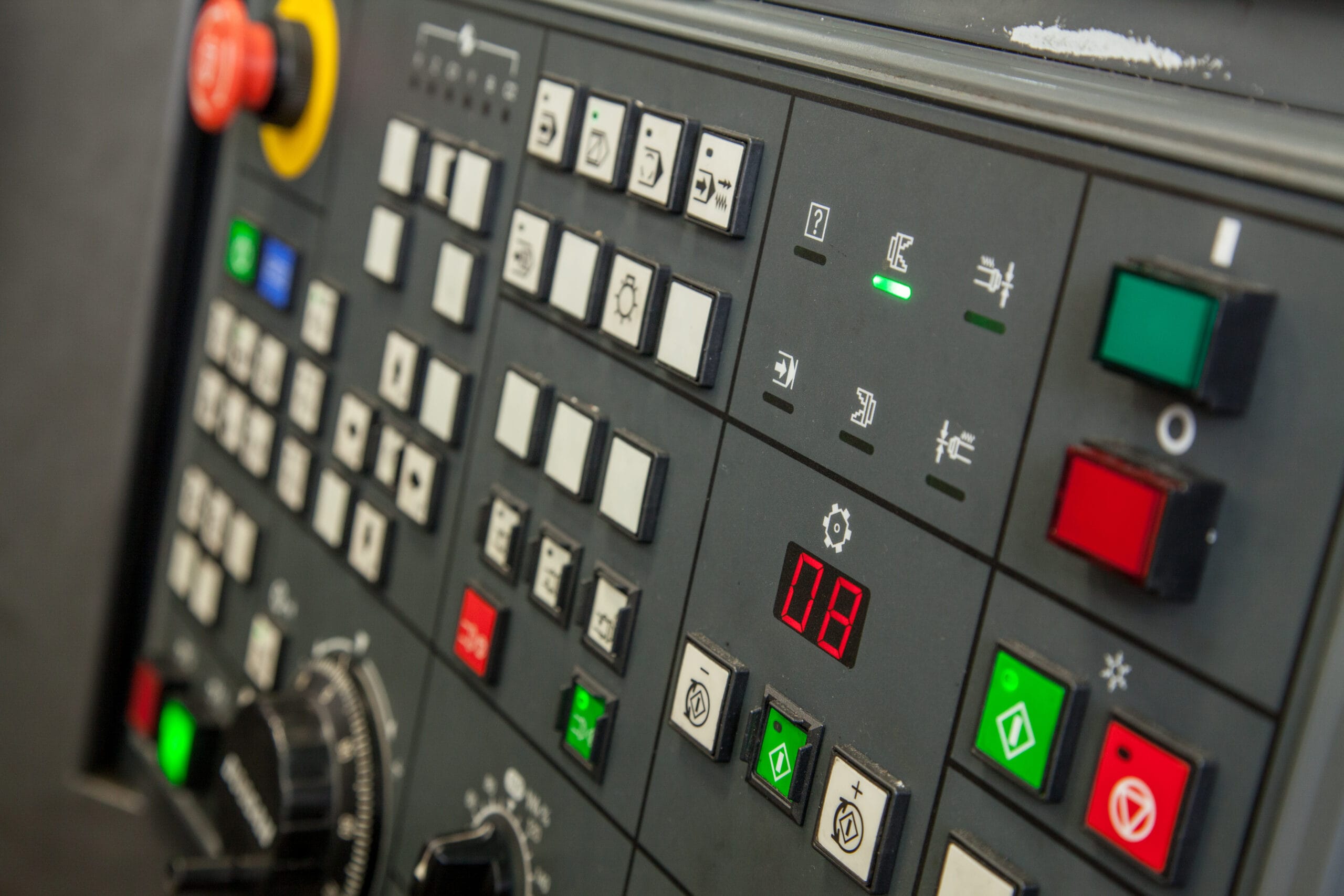
Environmentally conscious engineering is fast becoming a vital consideration for rail companies and the manufacturers’ that supply them. As suppliers of CNC machining to the rail industry, M-CNC hone our processes to ensure energy-efficient production – without compromising on quality, performance, and delivery.
How inefficient CNC machining impacts the environment
Whilst CNC machining is known for incredible precision and speed when it comes to manufacturing, its reliance on raw materials and electricity can negatively impact the environment when undertaken carelessly. Inefficient, energy-hungry CNC machining scales up when producing large, complex rail parts such as bogie and suspension components.
The negative impact of inefficient machining includes:
- Material waste: The subtractive process of CNC machining generates scrap metal (swarf, offcuts, etc). Unless these processes are highly optimised, material waste builds up unnecessarily.
- Energy usage: CNC machines run powerfully and for extended periods, leading to high energy use. Manufacturers that don’t upgrade their stock to more modern, energy-efficient machines increase their carbon footprint.
- Chemical disposal: The chemicals contained in the cutting fluids and lubricants essential to CNC machining must be disposed of safely to avoid harming the local ecosystem.
Sustainable CNC machining for the rail industry
CNC machining is the manufacturing method of choice for many rail companies. It provides full traceability across supply chains and ensures tight tolerances for rail parts are met.
With many rail companies increasingly taking steps to ensure a more sustainable future, CNC suppliers to the rail industry are adopting new machining processes and strategies to meet these environmentally conscious requirements.
1. Reduction of material waste
At M-CNC, we use strategic planning and production to ensure material waste is kept to a minimum. Our machines are integrated with advanced CAD/CAM software, and one of the many advantages of this software is the efficiency it brings to projects. All collaborators on a part can view and make design changes in real time, ensuring a part only goes into production once the design is perfected.
We also use an ERP system for real-time job and stock tracking across our company. This helps keep projects on track across our entire supply chain, lowering raw material use and internal material waste.
2. Energy-efficient machining
Whilst CNC machining has historically always been an electricity-hungry manufacturing method, modern machines are often equipped with energy-saving controls, such as:
- Inverter-controlled motors
- Efficient energy management systems
- Energy-saving modes
At M-CNC we continually invest in our machine stock, improving our capacity for sustainable manufacturing. CAD/CAM software integration and multi-axis machining also reduces cycle time on part manufacture.
3. Scrap recycling and eco-friendly practices
Recycling and reclaiming the scrap materials CNC machining produces also helps reduce the carbon footprint of rail part manufacture.
Using environmentally friendly cutting fluids and lubricants where possible is also important. These are usually made from biodegradable materials or plant-based oils, which will not harm the local ecosystem (but still need to be disposed of safely).
4. Right First Time quality control processes
An important part of sustainable manufacturing is achieving Right First Time quality. Working towards this principle reduces rework and waste by ensuring parts meet the high quality standards demanded by the rail industry on the first attempt.
One of the quality practices we use to ensure this is First Article Inspection (FAI). Generally, this is done by inspecting the first part, or batch of parts, produced for an order to check they match the technical drawings and manufacturing specifications required. This identifies any potential production issues so they can be fixed ahead of time – saving significantly on wasted money and resources.
5. CMM measuring
Another quality control practise M-CNC use to ensure Right First Time quality is CMM measuring. Our state-of-the-art Coordinate Measuring Machines (CMMs) measure the physical geometry of parts to an incredibly high degree of accuracy.
We use CMM measuring to test that every part we machine meets the original intent of the design. This is particularly crucial in rail manufacture, where even the smallest deviation from a design can compromise the safety of a part.



