
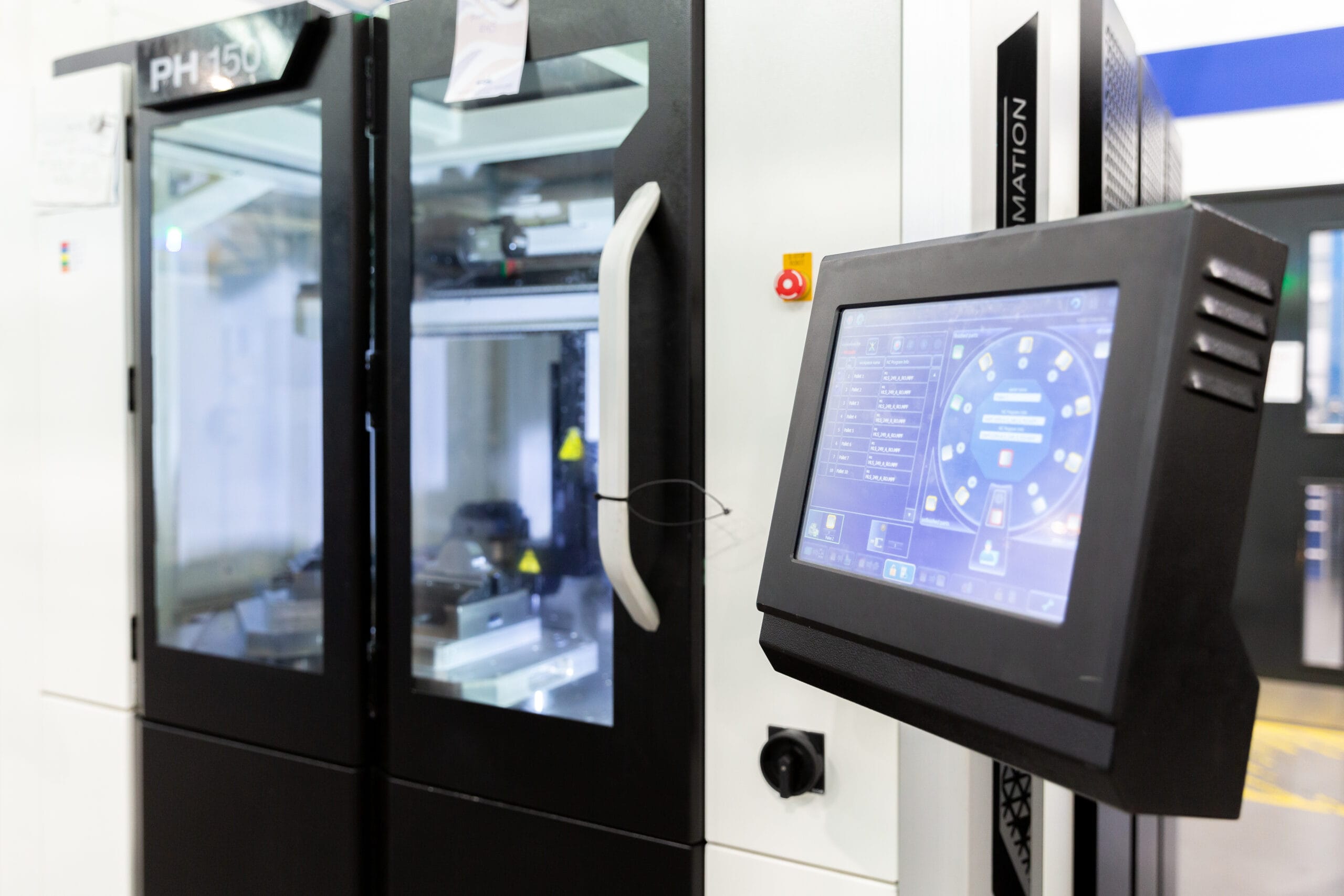
In rail manufacture, the complete traceability of parts and production is essential. One of the ways rail manufacturers like M-CNC ensure traceability is through a sophisticated ERP system.
Integrating MRP tracking with automated machining guarantees complete part provenance, which is vital for the role of precision engineering in modern rail networks.
What is manufacturing traceability?
A vital part of quality management, traceability is the means by which all manufacturing processes can be traced – from raw material procurement, to part production, assembly, and distribution.
Manufacturing traceability is defined in the ISO 9001 international standard. Traceability tells you where a part was produced and who manufactured it. It can essentially be divided into two elements:
- Chain traceability: The movement of products in multiple processes between manufacturers (supply chain).
- Internal traceability: The movement of products within a single company or process.
Why is traceability important in rail manufacturing?
Full product traceability is particularly important in rail manufacturing because of the high safety standards the industry demands. The quality of a rail part cannot be in question and, should any problems occur, the manufacturer must act promptly.
Traceability is essential to the rail industry because it:
- Minimises damages and production problems and, in the event of an issue, enables the quick recall of parts.
- Ensures quality management from start to finish.
- Optimises supply chains and creates full transparency of a part’s entire production process.
- Enables efficient production if a legacy component is required.
- Creates trust between rail manufacturers and their customers.
How ERP and MRP systems enable traceability
An ERP (Enterprise Resource Planning) system runs an integrated view of a company’s internal operations. This can include financial management, stock inventory, production planning, and more.
Alongside this, an MRP (Material Resource Planning system) can be used to manage the company’s inventory and materials. This is particularly important for manufacturing companies when scheduling the production of parts.
ERP and MRP systems are essential for rail manufacture traceability because they document the entire process of part manufacture from start to finish. This means that every production order meets the requirements for compliance and auditability needed in the rail sector.
Traceability and ERP systems ensure the durability and quality of manufactured rail parts. Rail companies are also increasingly relying on software to conduct rail maintenance more efficiently, keeping track of components, vehicles, and other infrastructure. ERP systems, and the traceability they enable, fit into this move towards software solutions for railway maintenance.
Traceability at M-CNC
At M-CNC, we use the Tricorn ERP system to improve productivity, reduce inefficiencies, and provide full traceability. This highly advanced software gives us real-time data to keep every project we run on track.
1. Accurate, real-time job tracking
Our ERP system displays real-time data, keeping every project on track. This includes:
- Job status
- A breakdown of costings
- Delivery estimates
2. Managing our supply chain
Our external operations can be booked out and tracked through our ERP system. This also gives us the ability to see any potential issues early and take corrective action.
The system can be adjusted quickly to handle any changes, and keep our staff and clients up to date on the status of all projects.
3. Reduced downtime
Data-driven scheduling and job tracking means there is now no need to chase information across the business. This enables a clear understanding of job costings and delivery estimates, and reduced delays and downtime.



